AI is transforming cybersecurity by improving threat detection, automating responses, and identifying vulnerabilities faster than traditional methods. Businesses adopting modern Cybersecurity & Managed SOC practices are increasingly using AI to strengthen their security posture against evolving threats.
AI Vs AI: Why Cybersecurity Has Never Been More Critical
Listen to this article
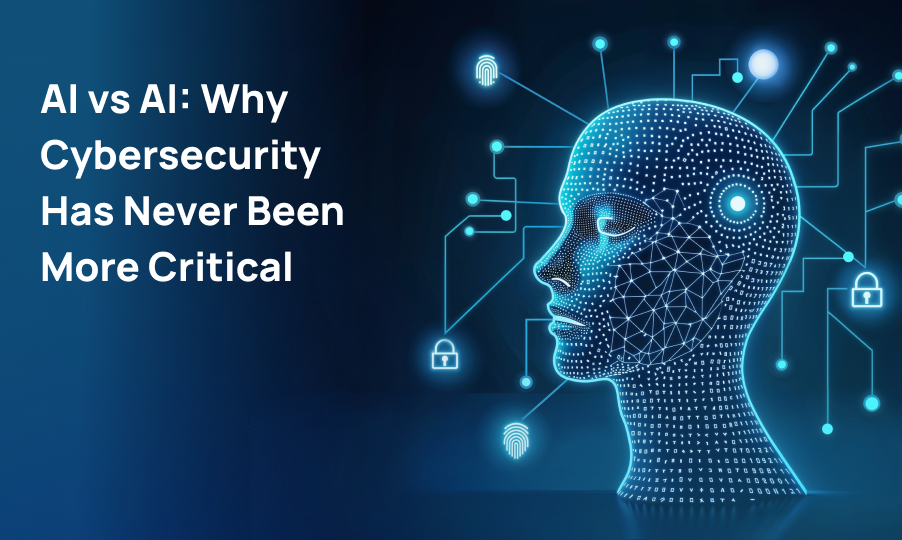
Can artificial intelligence be both the sword and the shield? While AI-driven security tools help defend against threats, the same technology is being weaponized by attackers to launch smarter, faster, and more relentless cyber-attacks. This is the new digital arms race one where machines fight machines
Table of Contents
The Dual Role of AI in Cybersecurity
AI is no longer just a tool for innovation it is now the centerpiece of both cyber offense and defense. On the defensive side, AI-powered solutions enhance threat detection, automate incident responses, and predict vulnerabilities through advanced analytics. On the offensive side, cybercriminals harness the same technology to craft targeted attacks, develop adaptive malware, and automate vulnerability discovery at unprecedented scale and speed.
Key Ways Attackers Exploit AI
Automated Phishing Campaigns
- Targeted Attacks: AI analyzes social media profiles and public data to craft highly personalized phishing emails, dramatically increasing the success rate of attacks against individuals and organizations
- Scale & Speed: AI automates mass phishing campaigns simultaneously, allowing attackers to target thousands of individuals with minimal effort and at a speed no human team could match.
- Real-World Example: In July 2020, AI tools were used to identify and target high-profile Twitter accounts including Elon Musk and Barack Obama, amplifying the reach and impact of the social engineering attack.
AI-Powered Malware
- Adaptive Behavior: Modern malware uses AI to modify its code in real-time, continuously evading traditional signature-based detection methods used by standard antivirus and security tools.
- Self-Learning Threats: AI-driven malware learns from its environment with every interaction, becoming progressively harder to detect, contain, and remove from compromised systems.
- Real-World Example: Emotet, once a basic banking Trojan, used AI to adapt, spread laterally across networks, and evade detection evolving into one of the most destructive malware strains globally.
Deepfake Technology & Vulnerability Discovery
- Voice & Video Manipulation: Cybercriminals use AI-generated deepfakes to convincingly impersonate executives, enabling financial fraud, unauthorized access, and corporate espionage at scale.
- Financial Fraud: In 2019, a company executive was deceived into transferring $243,000 after receiving a deepfake voice call that convincingly mimicked the CEO's speech patterns and tone.
- Rapid Network Scanning: AI algorithms scan entire networks for exploitable security weaknesses at speeds no human hacker could match probing systems continuously, 24 hours a day.
How to Defend With AI
Behavioral Analytics
- Baseline Monitoring: AI establishes a profile of normal user behavior across systems, enabling it to detect even the most subtle deviations that may indicate an active or imminent security breach.
- Real-Time Alerts: Abnormal activity triggers instant alerts, giving security teams the critical window needed to respond before significant damage is done to systems or data.
- Reduced False Positives: AI continuously refines its behavioral models, improving detection accuracy and reducing alert fatigue so security teams can focus on genuine threats.
Threat Intelligence Platforms
- Multi-Source Aggregation: AI collects and correlates threat data from multiple sources including dark web feeds, security logs, and global threat databases into a single, actionable view.
- Proactive Defense: Real-time threat intelligence enables security teams to anticipate and neutralize threats before they can infiltrate systems and cause operational or financial damage.
- Actionable Insights: AI translates complex threat data into clear, prioritized recommendations helping teams focus resources on the most critical and time-sensitive risks first.
Automated Response & Adversarial AI
- Instant Isolation: AI autonomously detects and isolates compromised systems the moment a threat is identified, minimizing spread and containing damage before human teams can intervene.
- Faster Remediation: Automated workflows initiate remediation processes immediately, drastically reducing response times and limiting the operational impact of any successful attack.
- Adversarial AI Defense: Security experts use adversarial machine learning to simulate AI-driven attacks, identify weaknesses, and continuously harden defensive systems against evolving threats.
The Ethical & Strategic Dilemma
As AI becomes central to both cyber offense and defense, critical ethical questions emerge. Over-reliance on AI can reduce human oversight, create dangerous blind spots, and generate a false sense of security. Organizations must balance automation with accountability ensuring ethical considerations are embedded into every layer of their cybersecurity strategy alongside technical solutions.
The Path Forward
Winning the AI vs. AI battle requires more than technology; it demands strategy, collaboration, and responsibility. Organizations must prioritize:
Invest in AI-driven security technologies while maintaining strong and consistent human oversight at every level.
Foster cross-industry collaboration to share threat intelligence, best practices, and collective defensive strategies.
Prioritize ethical AI development to reduce the risks associated with autonomous decision-making in high-stakes security environments.
Conclusion
The AI vs. The AI cybersecurity battle is happening right now and the stakes have never been higher. Organizations that invest in intelligent security frameworks, maintain human oversight, and embrace ethical AI practices will be best equipped to defend against this new generation of threats. The question is not whether AI will define cybersecurity. It already has. The real question is whether your organization is ready.
Ready to take the next step?
Frequently Asked Questions
AI-powered threats include automated phishing campaigns, adaptive malware, deepfake scams, and rapid vulnerability discovery. As these threats become more advanced, organizations are investing in stronger Cybersecurity & Managed SOC capabilities to improve protection and resilience.
Yes. AI can analyze large volumes of security data, detect unusual behavior, provide real-time alerts, and automate incident response processes. These technologies are becoming an important part of modern Services focused on business security and risk management.
Deepfakes can be used to impersonate executives, employees, or trusted individuals through realistic voice and video content. This can lead to financial fraud, unauthorized access, and reputational damage, making cybersecurity a critical concern for businesses across different Industries.
While AI can improve efficiency and detection accuracy, human expertise remains essential for decision-making, threat analysis, and ethical oversight. Many organizations combine AI-powered tools with experienced security teams to create a balanced approach to cybersecurity.
Businesses can improve security by implementing strong access controls, conducting regular security assessments, monitoring network activity, and providing employee training. These efforts are often supported through specialized Cybersecurity & Managed SOC solutions.
Cyber incidents can impact operations, customer trust, compliance requirements, and revenue. As organizations continue their digital transformation journeys, cybersecurity is becoming a core part of business strategy alongside cloud, AI, and other technology Services.