An Agentic Shopping Assistant is an AI-powered system that understands customer needs, searches products, compares options, provides personalized recommendations, and can assist with shopping tasks.
Agentic Shopping Assistants: How AI Is Transforming Ecommerce
Listen to this article
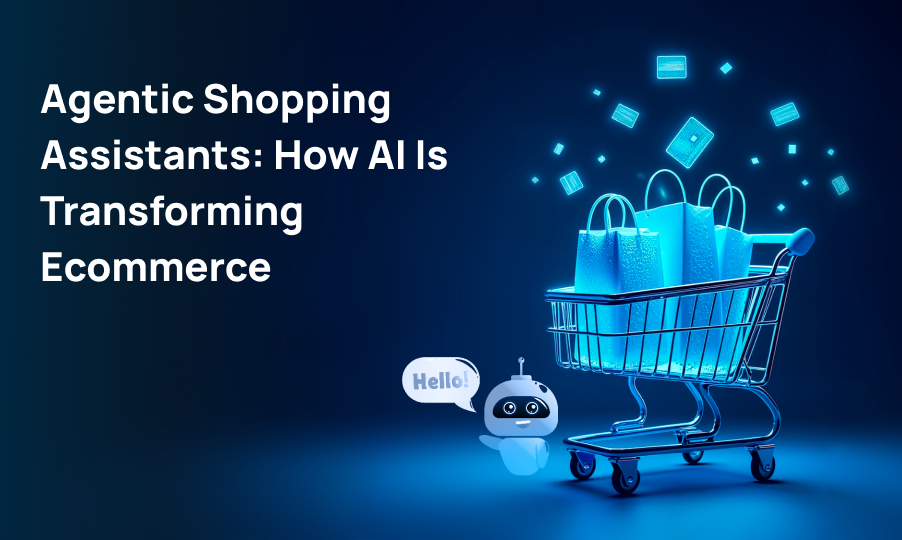
Online shopping is becoming more personalized as customers expect faster product discovery, relevant recommendations, and easier purchasing experiences. Agentic Shopping Assistants are helping ecommerce businesses meet these expectations by combining artificial intelligence, automation, and product data.
Unlike traditional chatbots that mainly answer questions, an agentic shopping assistant can understand a customer's goal, search for relevant products, compare options, provide recommendations, and assist with shopping-related tasks.
Table of Contents
- What Is an Agentic Shopping Assistant?
- How Does an Agentic Shopping Assistant Work?
- Agentic Shopping Assistant vs. Traditional Chatbot
- Key Benefits for Ecommerce Businesses
- Agentic Shopping Use Cases in Cosmetics
- Technologies Behind Agentic Shopping Assistants
- Challenges to Consider
- The Future of Agentic Shopping
- Conclusion
What Is an Agentic Shopping Assistant?
An Agentic Shopping Assistant is an AI-powered system that can understand customer intent and perform multiple steps to help shoppers find suitable products.
For example, a customer might say:
“Find me a skincare routine for sensitive skin under $100, including a gentle cleanser, moisturizer, and sunscreen.”
Instead of simply showing a list of skincare products, the AI can understand the customer's preferences, budget, and product requirements. It can then search available products, compare options, and recommend a suitable combination.
This approach combines AI Agents & Copilots with ecommerce data to create a more intelligent and personalized shopping journey.
How Does an Agentic Shopping Assistant Work?
An agentic shopping assistant generally follows a multi-step process:
Understand → Search → Filter → Compare → Recommend → Assist.
First, the AI understands what the customer wants. It then searches connected product catalogs and filters products according to the customer's requirements.
-
It can compare factors such as:
- Price
- Product features
- Availability
- Ratings
- Customer preferences
- Product compatibility
Finally, the assistant presents relevant recommendations and can support additional shopping actions through connected ecommerce systems.
With AI+Automation, businesses can connect these assistants with ecommerce platforms, inventory systems, CRM tools, and order management systems.
Agentic Shopping Assistant vs. Traditional Chatbot
A traditional chatbot usually follows predefined conversations and provides answers to common questions. An agentic shopping assistant is more goal-oriented.
For example, a chatbot may answer:
“Yes, we have moisturizers for sensitive skin.”
An agentic shopping assistant can go further:
“Here are three moisturizers that match your requirements. One is under $30, another has a lightweight formula, and the third has the highest customer rating.”
The AI is therefore helping the customer make a decision, rather than simply providing information.
Key Benefits for Ecommerce Businesses
Agentic shopping assistants can provide several advantages for online retailers.
- Personalized Shopping: AI can understand individual requirements and provide recommendations based on the customer's conversation and preferences.
- Faster Product Discovery: Customers don't need to browse hundreds of products. They can describe what they need and receive a focused selection.
- Better Customer Engagement: Conversational shopping allows customers to ask follow-up questions and explore products naturally.
- Reduced Shopping Friction: By handling product research and comparisons, AI can simplify complex purchasing decisions.
- Increased Cross-Selling Opportunities: The assistant can recommend relevant complementary products. For example, when a customer chooses a cleanser, the AI may suggest a compatible moisturizer or sunscreen if appropriate.
- 24/7 Assistance: AI shopping assistants can support customers at any time without requiring a human agent for every basic question.
Agentic Shopping Use Cases in Cosmetics
The cosmetics and beauty industry is a strong use case for agentic AI because customers often have different preferences, budgets, product concerns, and routines.
-
An AI shopping assistant can help customers:
- Build skincare routines
- Find makeup products
- Compare cosmetic products
- Discover products based on preferences
- Find products within a specific budget
- Recommend complementary beauty products
For example, a customer could ask for a complete skincare routine under $100. The AI can consider the requested product categories and budget and present a suitable selection.
Technologies Behind Agentic Shopping Assistants
An effective agentic shopping solution typically combines several technologies, including:
- Generative AI for natural conversations
- AI agents for planning and task execution
- Product databases for accurate product information
- Recommendation engines for personalization
- APIs for ecommerce integrations
- Real-time data for inventory and pricing
- Automation for repetitive shopping workflows
Businesses can use Generative AI Platforms to build intelligent conversational experiences that can support more personalized customer interactions.
Challenges to Consider
Businesses should also consider data accuracy, privacy, security, and integration requirements when implementing agentic shopping solutions.
Product information such as pricing, availability, specifications, and inventory needs to remain accurate. Businesses should also establish clear permissions for actions such as adding products to carts or completing purchases.
Human oversight can remain important for sensitive actions, helping maintain customer trust and control.
The Future of Agentic Shopping
The future of ecommerce is moving beyond traditional search and basic chatbots. >a href="https://wisdomsquare.net/services/digital-transformation">AI agents can make shopping experiences more conversational, personalized, and automated.
Customers may increasingly use AI to discover products, compare choices, create shopping lists, and complete supported purchasing tasks.
For ecommerce brands, this creates an opportunity to build a digital shopping experience that understands what customers want, why they want it, and how to help them achieve it.
Conclusion
Agentic Shopping Assistants represent an important evolution in AI-powered ecommerce. By combining generative AI, AI agents, product data, personalization, and automation, businesses can make product discovery easier and shopping experiences more relevant.
For cosmetics, fashion, electronics, retail, and other ecommerce industries, agentic AI can help customers find suitable products faster while creating new opportunities for engagement and business growth.
Businesses exploring AI & Intelligent Systems can use agentic technologies to develop smarter, more personalized digital experiences.
Ready to take the next step?
Frequently Asked Questions
A traditional chatbot mainly answers questions, while an agentic shopping assistant can understand goals, perform multi-step tasks, compare products, and take supported actions.
Agentic Shopping Assistants can improve product discovery, personalize recommendations, increase customer engagement, reduce shopping friction, and automate repetitive customer support tasks.
Yes. Agentic Shopping Assistants can help customers discover skincare, makeup, and beauty products based on preferences such as product type, budget, desired features, and other requirements provided by the customer.
Yes. An AI shopping assistant can compare products based on factors such as price, features, ratings, availability, and customer requirements.
Yes. With APIs and appropriate integrations, Agentic Shopping Assistants can connect with ecommerce platforms, product catalogs, inventory systems, CRM platforms, and order management systems.