AI-Powered Automation
Hiring Isn't the Answer to Growth
Demand is rising, but new hires take months and add costly overhead. Automation lets your current team handle more work — without adding headcount.
 &
&









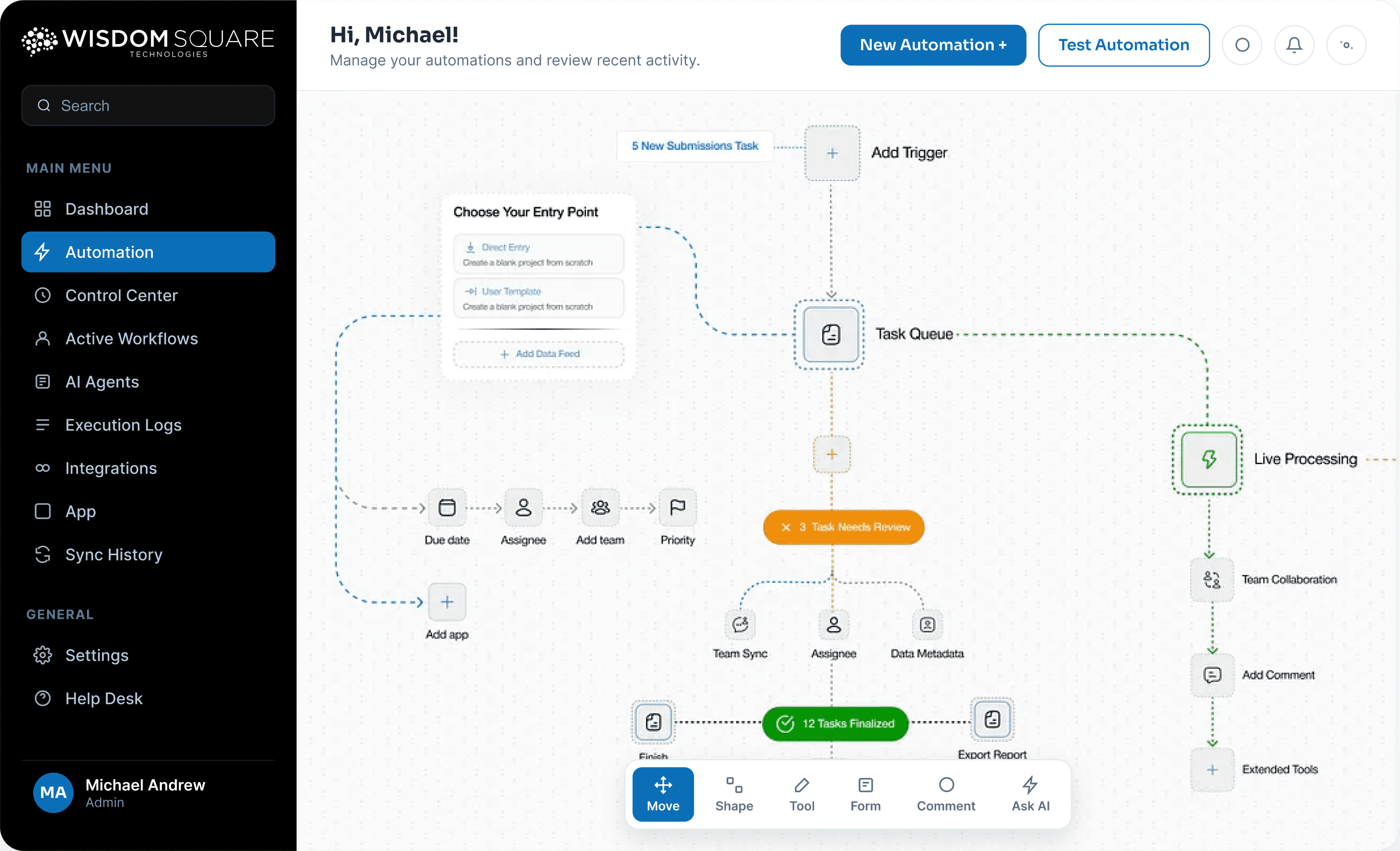
AI-driven automation
Smart automation that handles repetitive work, works with your existing tools, and helps your team do more without adding headcount.
AI-Powered Automation
Demand is rising, but new hires take months and add costly overhead. Automation lets your current team handle more work — without adding headcount.
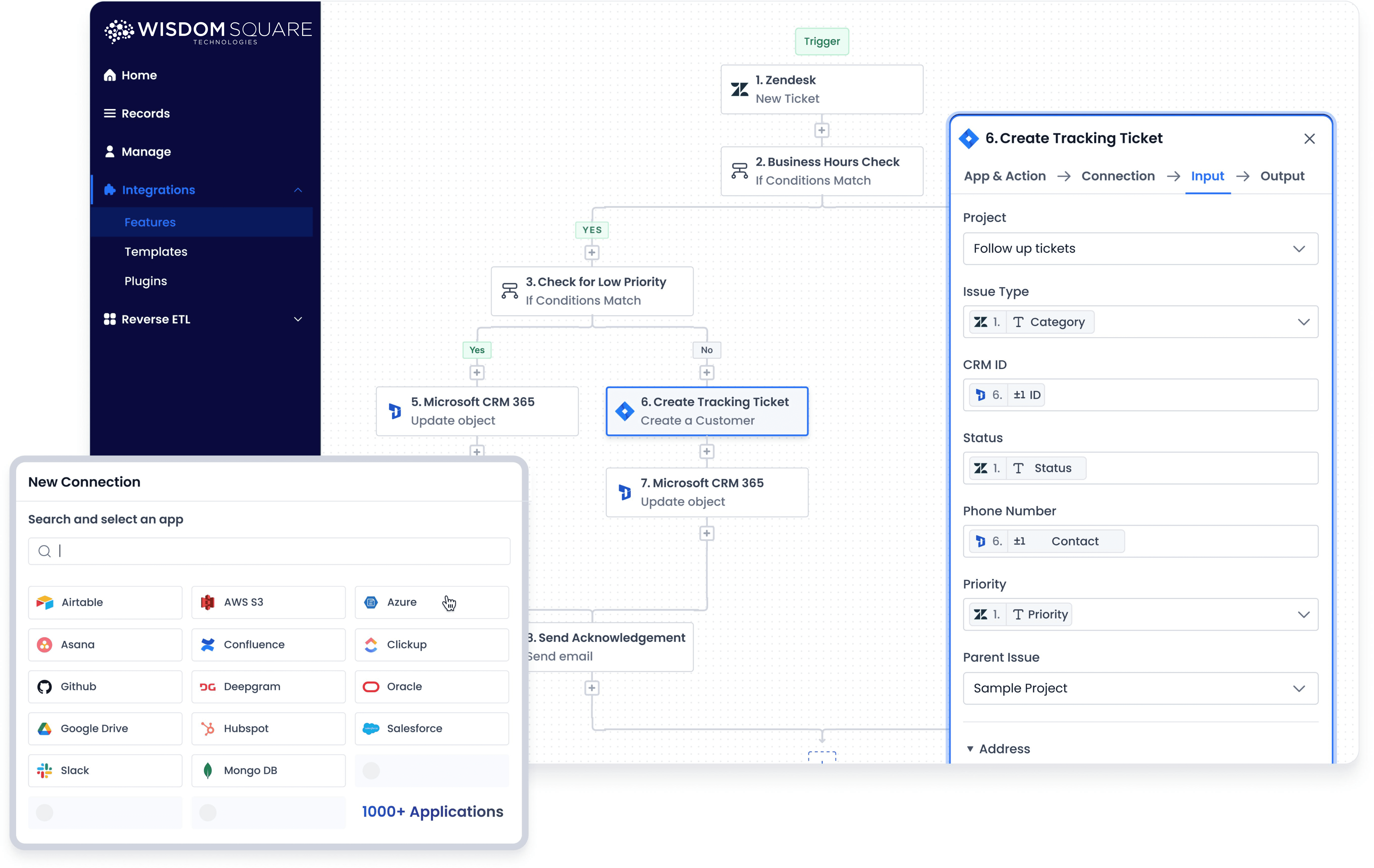
No platform bias
We work with the tools your team already uses and choose the right approach based on volume, integrations, and human judgment. That might be RPA for rule-based work in legacy systems, an AI model where documents or judgment are involved, or a straight API integration where no bot is needed.
How it works

We conduct a structured review of your repetitive workflows — identifying triggers, frequency, and the systems involved. You receive a complete workflow map regardless of whether you choose to move forward with us.

We weigh build cost against hours recovered for each workflow. Some clear the bar for automation, some don't — we'll tell you which is which before any commitment is made.

We build one automation end to end. You watch it run on your real data before committing to anything further.

Once the pilot proves out, we work down the priority list from the assessment. You add workflows as capacity demands, not on a fixed contract.
Free · No obligation
Tell us which process is eating the most time. We'll map where the volume sits and come back with a shortlist of what's worth automating — and what isn't.
ISO 27001:2022 Certified · AICPA SOC Audited
We'll never share your details. We reply within one business day.
Our Technology
AI models and platforms powering intelligent applications
Frameworks and libraries for building AI-powered solutions


Databases for storing and searching high-dimensional data


Tools for connecting AI models with enterprise knowledge



Infrastructure for hosting, scaling, and deploying applications



Tools for collaboration, communication, and project delivery



Case Studies
AI & RAG
Sep 30, 2026
GEO & SEO
Aug 2, 2026
CYBERSECURITY
June 22, 2026
A 30-minute call. We map your highest-volume repetitive workflows and tell you which ones are worth automating — and which aren't.
Request your process reviewFAQs
From setup to support, here are the answers you need to launch faster with confidence.
Request a process reviewHiring adds salary, benefits, equipment, training, management, and other overhead. It also takes time to recruit and ramp employees. Automation can handle specific repetitive workflows continuously and scale with demand without requiring a proportional increase in headcount. The right comparison depends on the workflow, transaction volume, integration requirements, and level of human judgment involved. We calculate the economics before recommending automation.
We have a US office in New Hyde Park, NY, with our delivery team based in Bengaluru, India.We hold ISO 27001:2022 certification and an AICPA SOC report. Assessment calls and ongoing reviews run in US business hours.
No. Automation can provide greater flexibility when demand fluctuates. Instead of maintaining additional capacity entirely through fixed headcount, automated workflows can continue handling routine work when demand is high without requiring permanent staffing increases. This can be particularly valuable for businesses with seasonal or cyclical demand.
Most employees don't want to spend their days on repetitive data entry, email chasing, administrative work, or report preparation. The goal isn't to replace your team. It's to remove low-value work so employees can spend more time on meaningful tasks that require expertise, creativity, and human judgment. When implemented with the team involved, automation can improve productivity and make roles more engaging.
The cost depends on workflow complexity, system integrations, data requirements, security controls, and the level of customization required. Rather than applying a one-size-fits-all price, we evaluate each workflow and estimate the implementation cost alongside its expected savings and business impact. This allows you to prioritize automations based on measurable ROI and payback potential.
Usually both, and sometimes neither. RPA suits stable, rule-based tasks in systems without APIs: re-keying data between applications, pulling reports, moving files. AI suits work that involves reading documents, handling variation, or making a judgment call. Many workflows need one to feed the other. We recommend based on the workflow, not on a platform we prefer, and we tell you during the assessment which approach clears the bar on cost.