
Hospital Management System Healthcare Software
To streamline hospital operations, the system integrates essential functions such as electronic health records (EHR), medical billing, and appointment scheduling. It prioritizes operational efficiency, patient data security, and compliance with U.S. healthcare regulations, including HIPAA. This enables hospitals and healthcare providers to improve care coordination, simplify administrative workflows, and deliver a more seamless patient experience.
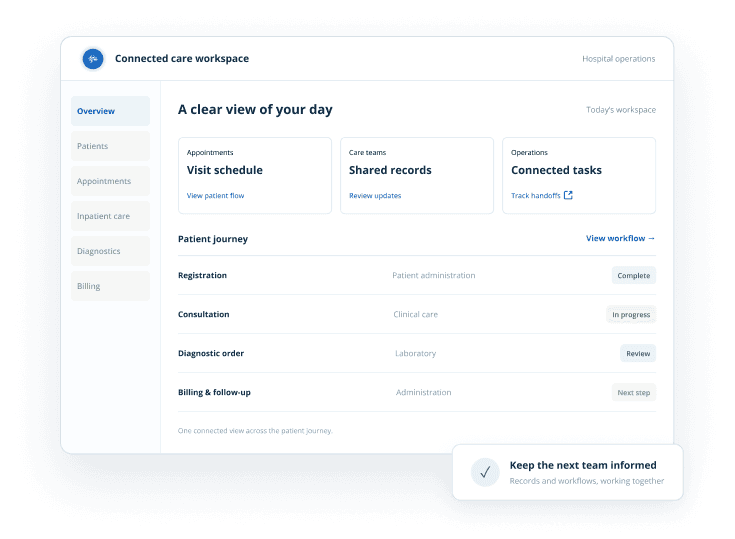
Advantages of Hospital Management System for U.S. Healthcare Providers
-
Improved Operational Efficiency
Automate administrative tasks and optimize daily hospital operations.
-
Better Patient Care Coordination
Streamline patient registration, appointment scheduling, and access to electronic health records (EHRs).
-
Accurate Data and Informed Decision-Making
Maintain reliable patient and operational data to support clinical and administrative decisions.
-
Reduced Administrative Costs
Minimize manual work, reduce errors, and improve resource utilization through automated workflows.
-
Scalable Healthcare Management
Support the evolving needs of hospitals, from small community facilities to large healthcare systems.

Key Features of a Hospital Management System
-
01
Comprehensive Patient Management
Manage patient registration, medical histories, admissions, discharges, and follow-up care.
-
02
Electronic Health Records (EHR)
Maintain centralized patient records to support care coordination and clinical workflows.
-
03
Medical Billing and Revenue Cycle Management
Streamline billing, insurance claims processing, payment tracking, and financial reporting.
-
04
Appointment Scheduling and Patient Flow Management
Simplify appointment booking, reduce wait times, and improve patient flow.
-
05
Pharmacy and Inventory Management
Track medications, medical supplies, stock levels, and expiration dates.
-
06
Physician and Staff Management
Coordinate staff schedules, responsibilities, and resource allocation.
-
07
Laboratory and Radiology Integration
Connect diagnostic workflows, lab results, and medical imaging systems.
-
08
Data Security and Regulatory Compliance
Support patient data protection and compliance with applicable U.S. healthcare regulations, including HIPAA.
-
09
Intuitive User Interface
Provide easy-to-use tools for physicians, nurses, administrative staff, and hospital management.
-
10
Customizable Dashboards and Reporting
Generate actionable insights into patient volumes, operational performance, revenue, and resource utilization.
-
11
Multilingual Support and Staff Training
Accommodate diverse patient populations and simplify system onboarding with accessible interfaces and training resources.


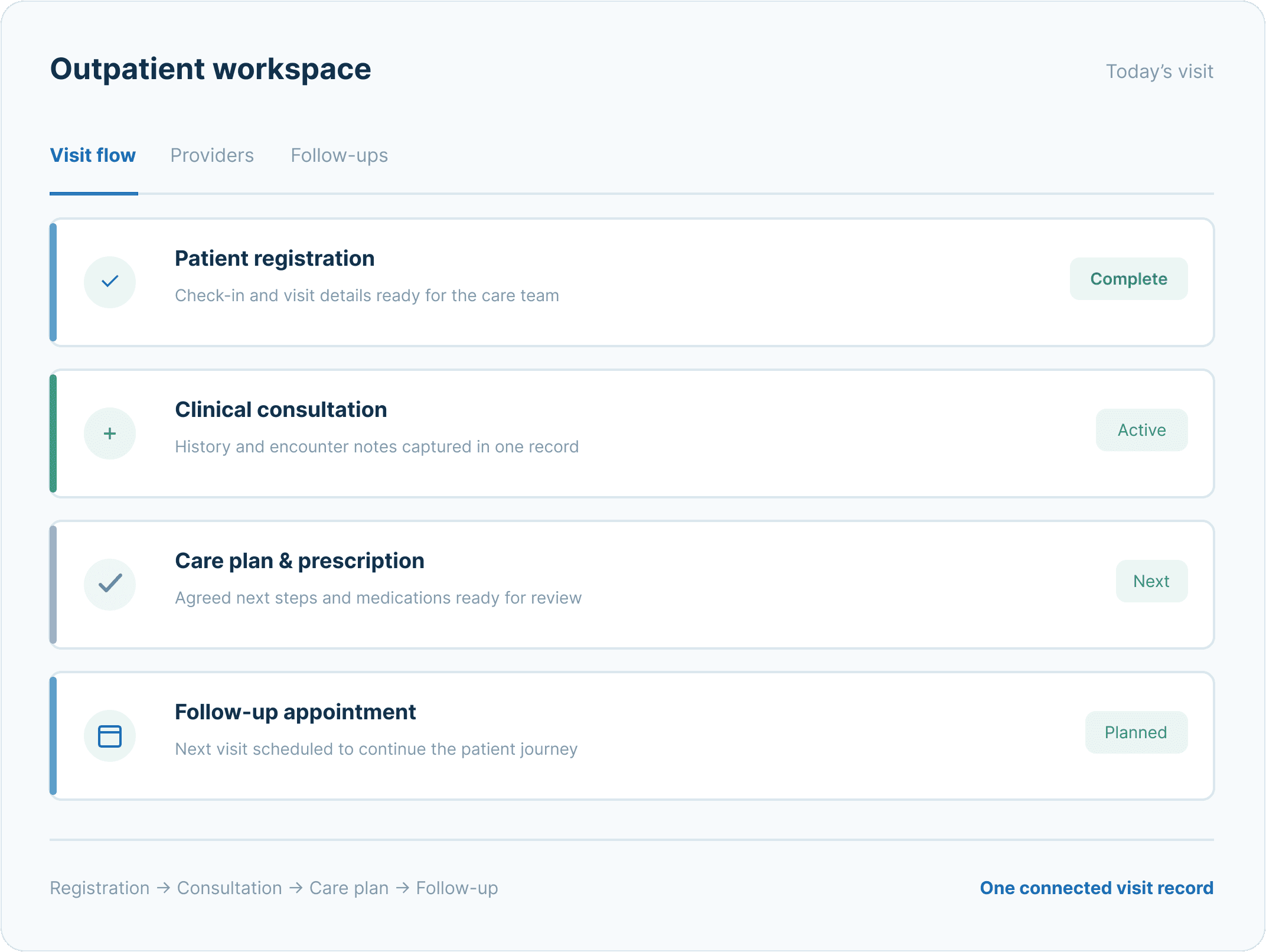
Outpatient Department (OPD) Module for U.S. Hospitals
-
Outpatient Registration
Register patients for outpatient visits and manage check-in workflows.
-
Consultation Management
Coordinate provider consultations, document visit details, and track follow-up care.
-
Provider Directory
View available physicians, specialties, and provider schedules.
-
Outpatient Visit Tracking
Maintain and review records of outpatient encounters and appointments.
-
E-Prescriptions
Create, access, download, and print electronic prescriptions, with support for applicable U.S. e-prescribing requirements.
-
Patient Medical History
Access patient histories, previous encounters, medications, allergies, and relevant clinical information to support informed care decisions.
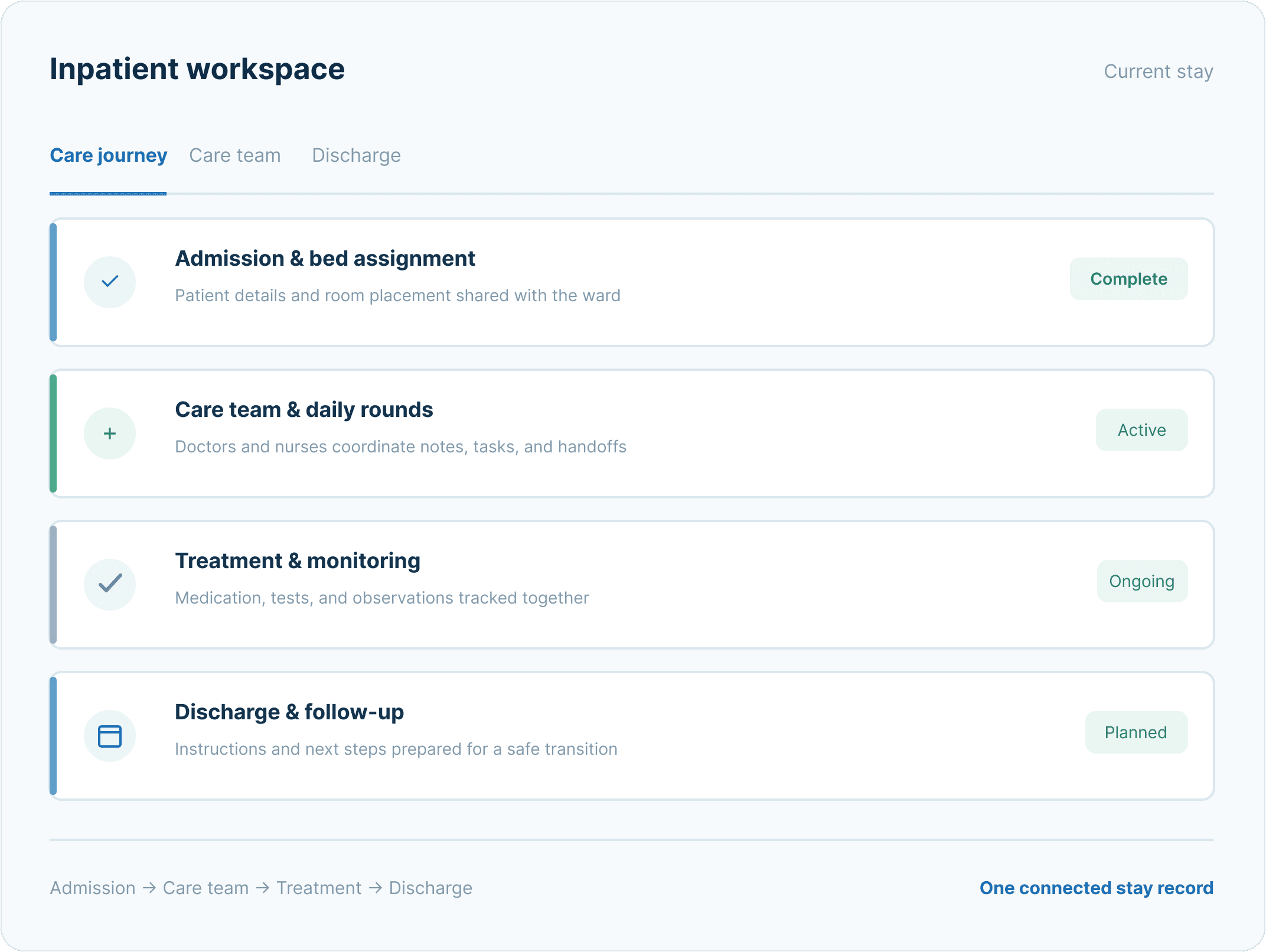
Inpatient Department (IPD) Module for U.S. Hospitals
-
Inpatient Consultation Management
Record and upload physician consultation notes, treatment plans, and clinical assessments.
-
Vital Signs Monitoring
Record and track vital signs, including blood pressure, heart rate, temperature, respiratory rate, and oxygen saturation.
-
Laboratory Results Access
View laboratory test results and diagnostic reports to support timely clinical decision-making.
-
Billing and Transaction Tracking
Review inpatient charges, payments, and billing transactions throughout the patient stay.
-
Clinical Notes Management
Create, update, and access progress notes, nursing notes, and other inpatient documentation.
-
Pharmacy and Medication Records
Access medication orders, administration records, and pharmacy data to support medication management during hospitalization.
Benefits of a Hospital Management Information System (HMIS) for U.S. Healthcare Providers
-
Automates Routine Administrative Tasks
Reduces manual workloads by automating patient registration, appointment scheduling, documentation, and other administrative processes.
-
Improves Operational Efficiency
Streamlines hospital workflows and helps healthcare teams manage daily operations more effectively.
-
Reduces Documentation Errors
Minimizes errors associated with paper-based records and manual data entry.
-
Enables Real-Time Patient Information Access
Provides authorized healthcare professionals with timely access to patient records and clinical information.
-
Enhances Interdepartmental Communication
Improves coordination among physicians, nursing teams, laboratories, pharmacies, and administrative departments.
-
Streamlines Medical Billing and Claims Processing
Simplifies patient billing, insurance claims management, payment tracking, and revenue cycle workflows.
-
Optimizes Budgeting and Resource Allocation
Helps hospital administrators monitor expenses, manage staffing, and allocate medical equipment and supplies efficiently.
-
Supports Healthcare Regulatory Compliance
Provides tools that support compliance with applicable U.S. healthcare requirements, including HIPAA privacy and security obligations, documentation standards, and relevant billing regulations.