

Multi-brand product lines across markets and categories
ENTERPRISE RETAIL TRANSFORMATION (FLAGSHIP)
AI-Driven Retail Operations Platform with Automation, Data Engineering & Real-Time Analytics
Executive Summary
A global luxury retail organization operating across multiple regions transformed its fragmented operations into a unified, automated, and real-time data-driven platform. By combining RPA, modern data architecture, and BI reporting, the organization significantly reduced manual effort, improved visibility, and enabled scalable global operations.
Client Context

Distributed retail channels across regions

Inventory and sales data from multiple external retailers

Internal ERP & reporting for insights
Operations required continuous coordination between retail partners, internal teams, and analytics functions.
Business Problem
- Operational Challenges
- Data sourced from retailer portals, Excel files, and internal systems
- Heavy dependency on manual downloads, data cleaning, and reconciliation
- Lack of standardized data model across regions and business units
- Reporting cycles taking multiple days with no real-time visibility
- Technology Gaps
- No centralized data platform to consolidate data across business units
- No automation layer, leading to heavy reliance on manual processes
- Limited integration across systems, causing data silos and inconsistencies
- Reporting dependent on static Excel workflows with no real-time visibility
- Business Impact
- Delayed decision-making due to slow, manual data processes
- High operational overhead from repetitive and unautomated workflows
- Inconsistent data accuracy caused by fragmented and siloed systems
- Limited scalability to support growth into new regions and markets
Solution Overview
- Automation Layer (RPA)
- Built 30+ UiPath bots to automate repetitive operations across retail business units
- Automated data extraction from retailer portals to reduce manual effort
- Scheduled workflows to ensure reliable daily data ingestion
- Data Engineering Layer
- Built ETL pipelines to clean, normalize, and standardize retailer data across regions
- Automated ingestion from Excel files, APIs, and RPA outputs
- Standardized schemas to ensure consistent data structure across all sources
- Data Platform (Lakehouse Architecture)
- Implemented Microsoft Fabric-based lakehouse as the core data infrastructure
- Designed Medallion Architecture - Bronze for raw ingestion, Silver for cleaned data
- Produced Gold-layer business-ready datasets for reporting and analytics
4. Analytics & Reporting Layer
- Built Power BI dashboards for sales performance tracking and inventory insights
- Delivered regional comparisons and executive KPIs for data-driven decision making
- Enabled real-time visibility across business units through interactive reporting
Architecture Overview
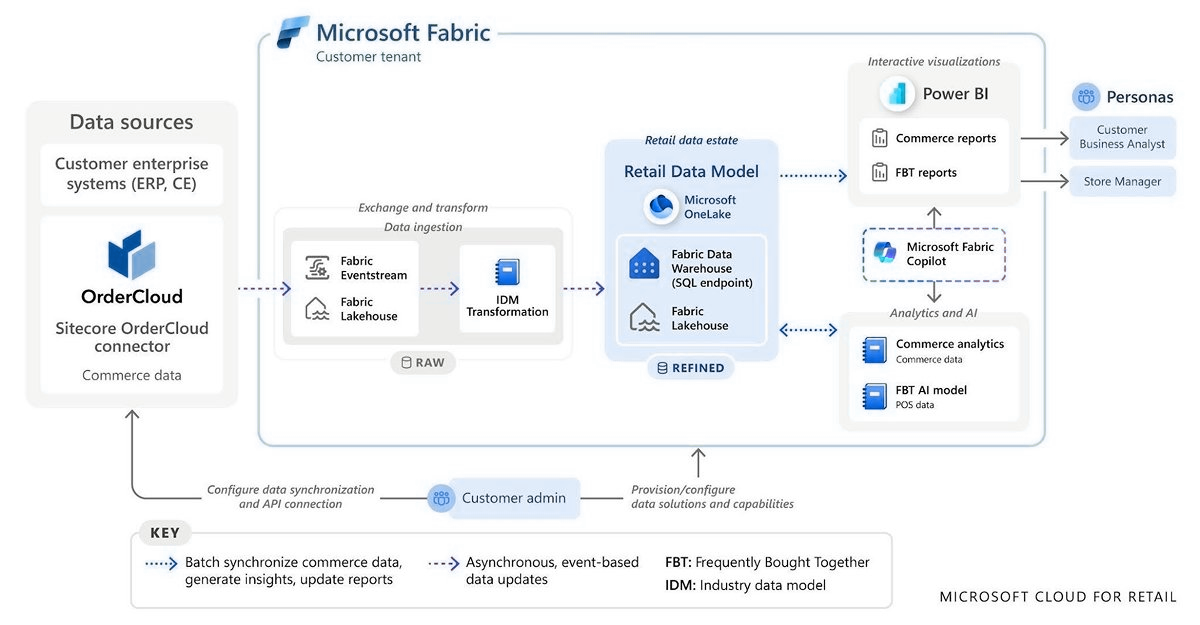
Detailed Execution Flow
1
Data Acquisition
- UiPath bots log into retailer portals
- Extract sales and inventory data
- APIs pull structured data where available
2
Data Ingestion
- Raw data landed in Bronze layer
- Batch pipelines triggered on schedule
- Original format preserved for downstream
3
Data Transformation
- PySpark ETL applied to clean and standardize data
- Schemas aligned across retailers
- Cleaned data promoted to Silver layer
4
Data Modeling
- Business logic applied in Gold layer
- KPIs defined across sales velocity
- Inventory turnover and regional performance
5
Consumption Layer
- Power BI connected to Gold layer
- Real-time and scheduled refresh enabled
- Dashboards live for business users
6
Automation Feedback Loop
- Bots updated on schema changes
- Scalable onboarding for new retailers
- Pipeline adapts as sources evolve
Technology Stack
Automation
UiPath (RPA bots)
Data Platform
Microsoft Fabric (Lakehouse)
PySpark (transformations)
Integration
REST APIs
File ingestion (Excel / CSV)
Analytics
Power BI
Key Strategic Decisions
Why RPA Instead of APIs?
- Retailer portals lacked API access
- RPA ensured scalability independently
- Automation bridged all source gaps
Why Medallion Architecture?
- Enabled clean separation of: Raw data | Processed data | Business logic
- Improved maintainability and scalability
Why Fabric?
- Unified analytics + data engineering
- Seamless Power BI integration
- Reduced infrastructure complexity
Scalability & Multi-Region Rollout
New retailer onboarding → plug into ingestion layer
Data standardization → reusable pipelines
Reporting → templated dashboards
Automation → configurable RPA workflows
Business Impact
Operational Efficiency
- 50% reduction in manual effort
- Automated daily workflows
Decision-Making
- Real-time dashboards over Excel
- Faster executive insights
Scalability
- Easy onboarding of new regions
- Consistent data model globally
Data Quality
- Standardized and validated datasets
- Reduced reconciliation errors


