

Thousands of research papers & PDFs
AI IN CHEMICAL RESEARCH
From Manual Literature Review to an AI-Driven Research Engine
Executive Summary
A chemical research organization faced a growing knowledge bottleneck — thousands of research papers, clinical studies, and compound datasets existed but remained inaccessible at scale. By designing a retrieval-driven AI platform using RAG architecture, MCP, and serverless infrastructure, the organization transformed manual literature review into a fast, consistent, and scalable research intelligence system.
Client Context

Scattered compound datasets & repositories

Few experienced researchers as bottleneck

No queryable system for research insights
The organization needed a scalable AI system to make its vast scientific knowledge instantly accessible and queryable.
Business Problem
- Operational Challenges
- Research locked in PDFs and scattered repositories
- Manual cross-referencing slowed every new query
- Same researchers bottlenecked all knowledge requests
- Turnaround times increased as demand grew
- Technology Gaps
- No centralized knowledge retrieval system
- No structured ingestion or document processing
- Heavy reliance on keyword search and manual reading
- No consistent or repeatable output mechanism
- Business Impact
- Different researchers produced different conclusions
- Leadership lacked a reliable research query system
- Scaling research capacity was nearly impossible
- High dependency on individual researcher expertise
Solution Overview
- DOCUMENT INGESTION — Knowledge Pipeline
- Research papers cleaned and segmented meaningfully
- Tagged and contextualized for scientific interpretation
- Transformed into vector representations for retrieval
- Structured ingestion over brute-force indexing approach
- RETRIEVAL LAYER (RAG) — Retrieval-Augmented Generation
- Retrieval-driven system, not purely generative model
- Identifies relevant studies across thousands of documents
- Surfaces supporting evidence for each research query
- Scales dynamically with new data added over time
- CONTEXT CONTROL (MCP) — Model Context Protocol
- MCP controls what context is included per query
- Structures how the model interprets scientific findings
- Handles study type, population, and statistical significance
- Enables reasoning across research, not just summarization
- INFRASTRUCTURE — Serverless Architecture
- Built on AWS Lambda for bursty, unpredictable queries
- Scales without unnecessary infrastructure overhead
- Handles varied query complexity with consistent performance
- Serverless design reduces operational maintenance effort
Architecture Overview
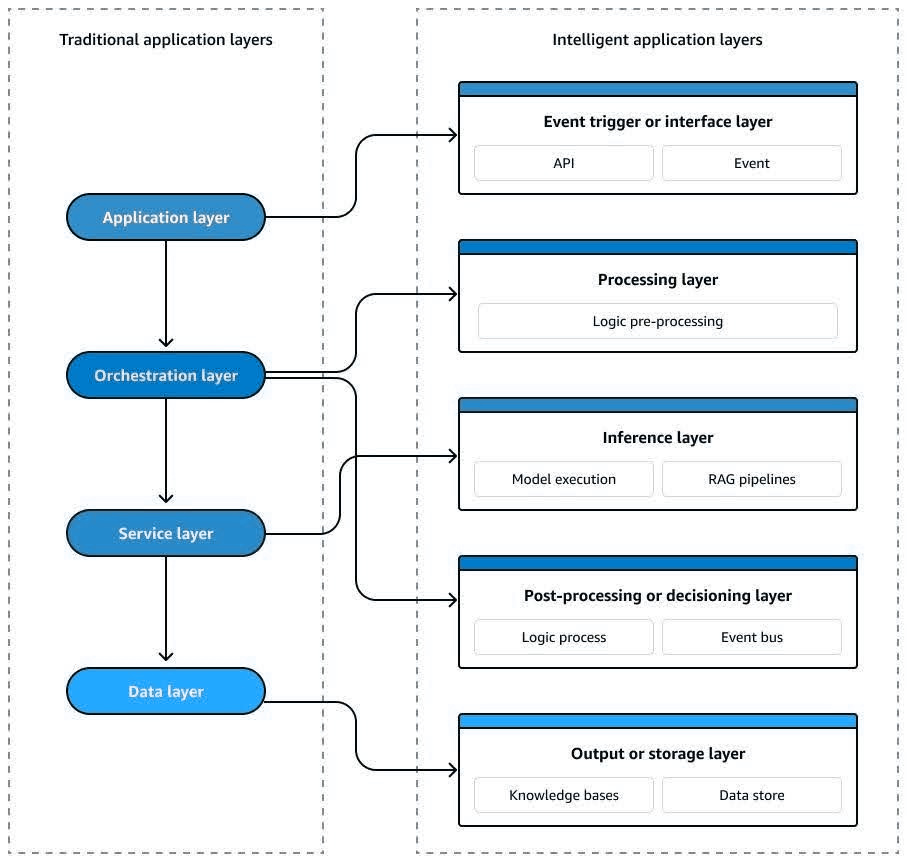
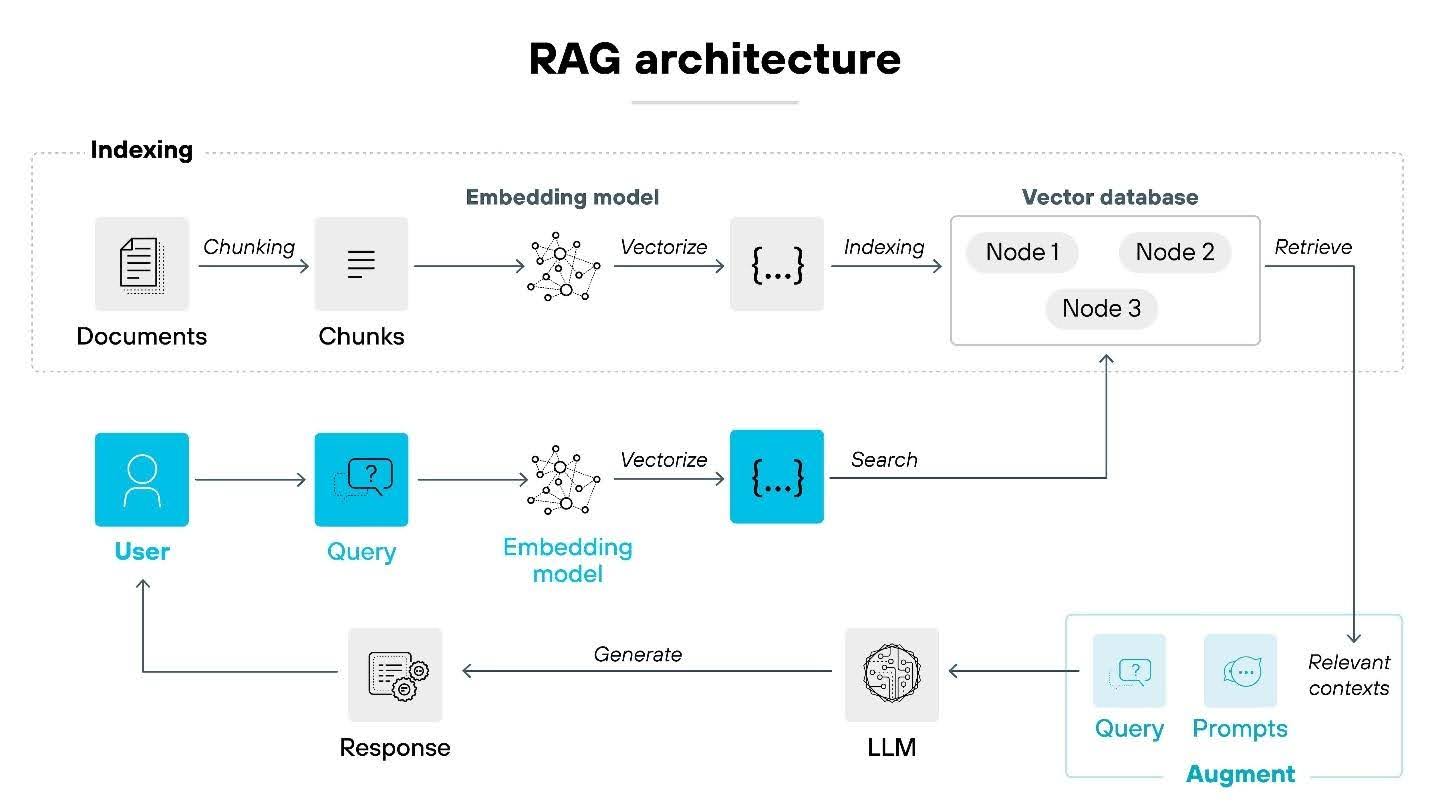
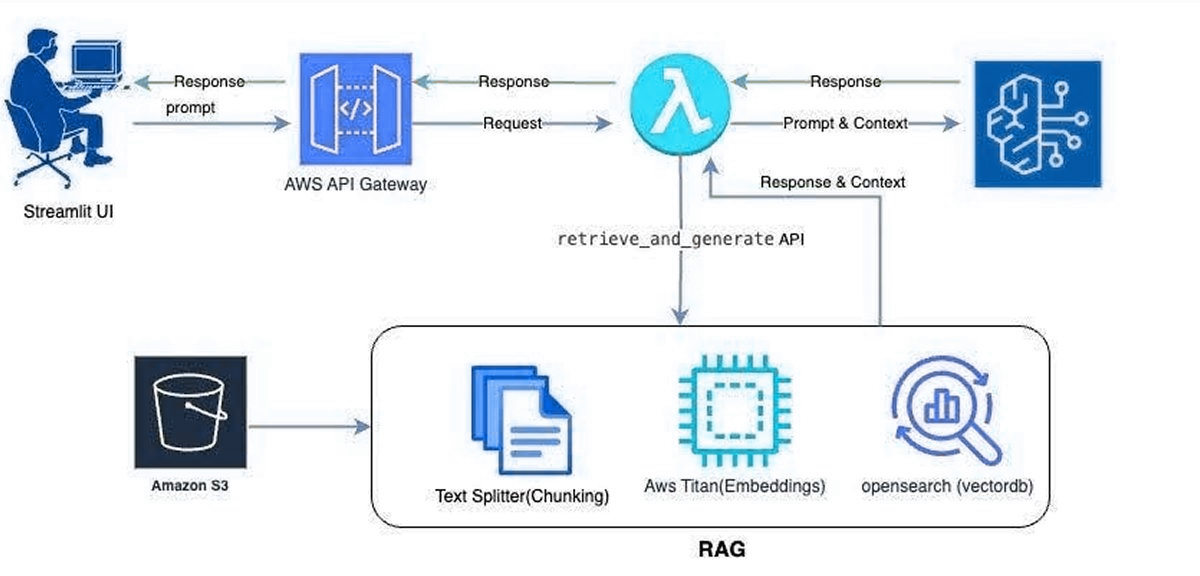
Detailed Execution Flow
1
Document Ingestion
- PDFs, studies, and datasets ingested at scale
- Cleaned and broken into meaningful segments
- Tagged and contextualized per scientific domain
2
Vector Embedding
- Segments transformed into vector representations
- Relationships mapped across studies and findings
- Stored in vector database for semantic retrieval
3
Query Processing
- Researcher submits a natural language question
- System retrieves most relevant document segments
- Context assembled based on query intent and type
4
MCP Context Control
- Controls what context is passed to the model
- Structures study type, population, and significance
- Prevents hallucination through controlled input
5
LLM Reasoning
- Model reasons over retrieved, structured context
- Generates consistent and explainable outputs
- Does not rely on memorization — only retrieval
6
Output & Insights
- Relevant studies surfaced with supporting evidence
- Consistent outputs regardless of which researcher asks
- Results improve as more documents are ingested
Technology Stack
Ingestion
PyPDF2
LangChain
Custom ETL Pipeline
Retrieval
FAISS
Pinecone
LangChain RAG
Context & Reasoning
MCP
Claude API
Prompt Engineering
Infrastructure
AWS Lambda
S3
Serverless Framework
Key Strategic Decisions
Why Retrieval over Training?
- Data changes with new studies
- Accuracy cannot allow hallucinations
- Retrieval beats memorization
Why MCP for Context Control?
- Raw output can be inconsistent
- MCP controls model context
- Enables repeatable responses
Why Serverless Infrastructure?
- Query demand is unpredictable
- Auto-scales without overhead
- Cost-efficient for variable usage
Scalability & Extensibility
Platform scales seamlessly as new research documents are added
Extendable to new scientific domains and compound datasets
Modular ingestion pipeline supports multiple document formats
Configurable MCP layers adapt to evolving research query needs
Business Impact
Research Efficiency
- Hours to minutes for review
- Instant document access
Decision Support
- Reduced manual tracking effort
- Fully automated key workflows
Knowledge Management
- Org-wide shared insights
- Self-improving knowledge base
Scalability
- Reduces reliance on individual experts
- Scales with data and AI workflows


